
What this guide can help with
Puppies develop quickly. The goal is not to complete one checklist, but to build an individual plan that changes with age, growth, lifestyle and disease risk.
Every pet is different. A veterinary examination remains the best way to understand symptoms and decide whether waiting is appropriate.
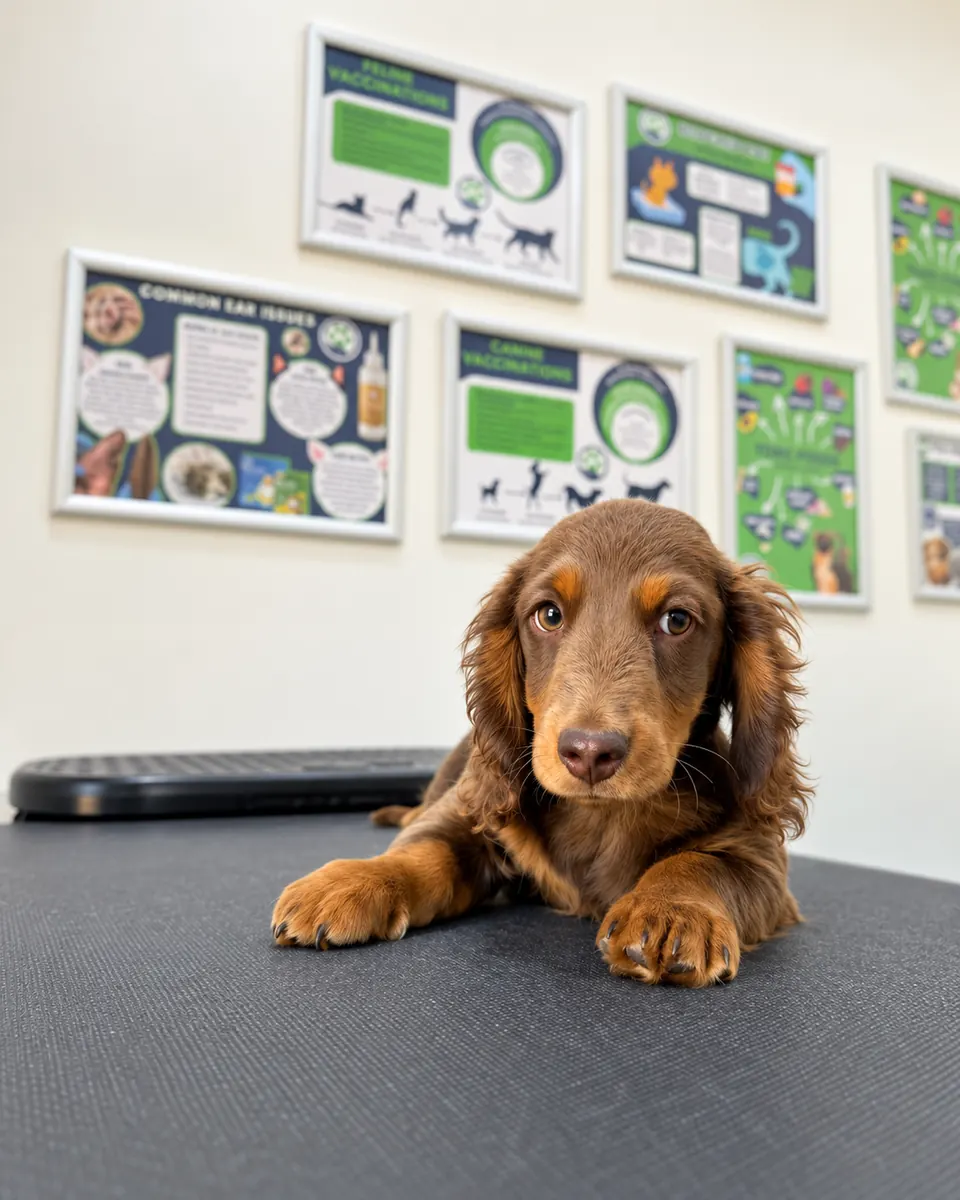
Your puppy’s early visits can build a lifelong care routine
Bringing questions about growth, feeding, behaviour and prevention helps the team shape advice around your puppy and your household.
Key points
- Book an early health examination and bring any breeder, shelter and vaccination records.
- Discuss a vaccination schedule based on age, maternal antibodies, local disease risk and lifestyle.
- Use reward-based handling and controlled, positive socialisation without overwhelming the puppy.
- Review diet, growth, body condition, parasite prevention, dental care and desexing timing with your veterinarian.
Helpful things to do at home
- Use a secure harness or collar and gradually practise calm car travel.
- Provide predictable sleep, toileting and feeding routines.
- Introduce handling of paws, ears and mouth with rewards.
- Contact the clinic before puppy school if your puppy has coughing, vomiting, diarrhoea or marked lethargy.
When to book an appointment
- New puppy examination
- Vaccination or parasite-planning visit
- Poor growth, persistent diarrhoea, coughing, skin disease or behaviour concerns
Seek urgent veterinary advice for
- Repeated vomiting or inability to keep water down
- Severe diarrhoea, blood in stool or marked lethargy
- Breathing difficulty, collapse, trauma or suspected poisoning
What may be worth discussing early?
Breed and sex do not determine your puppy’s future, but they can help the veterinary team decide which family records, examination findings or evidence-supported screening conversations may be useful during the first year.
Choose the details above
See selected health topics that may be useful to mention at your puppy’s veterinary visits.
References
This guide is general information only. Your veterinarian will tailor advice to your pet after an examination.