
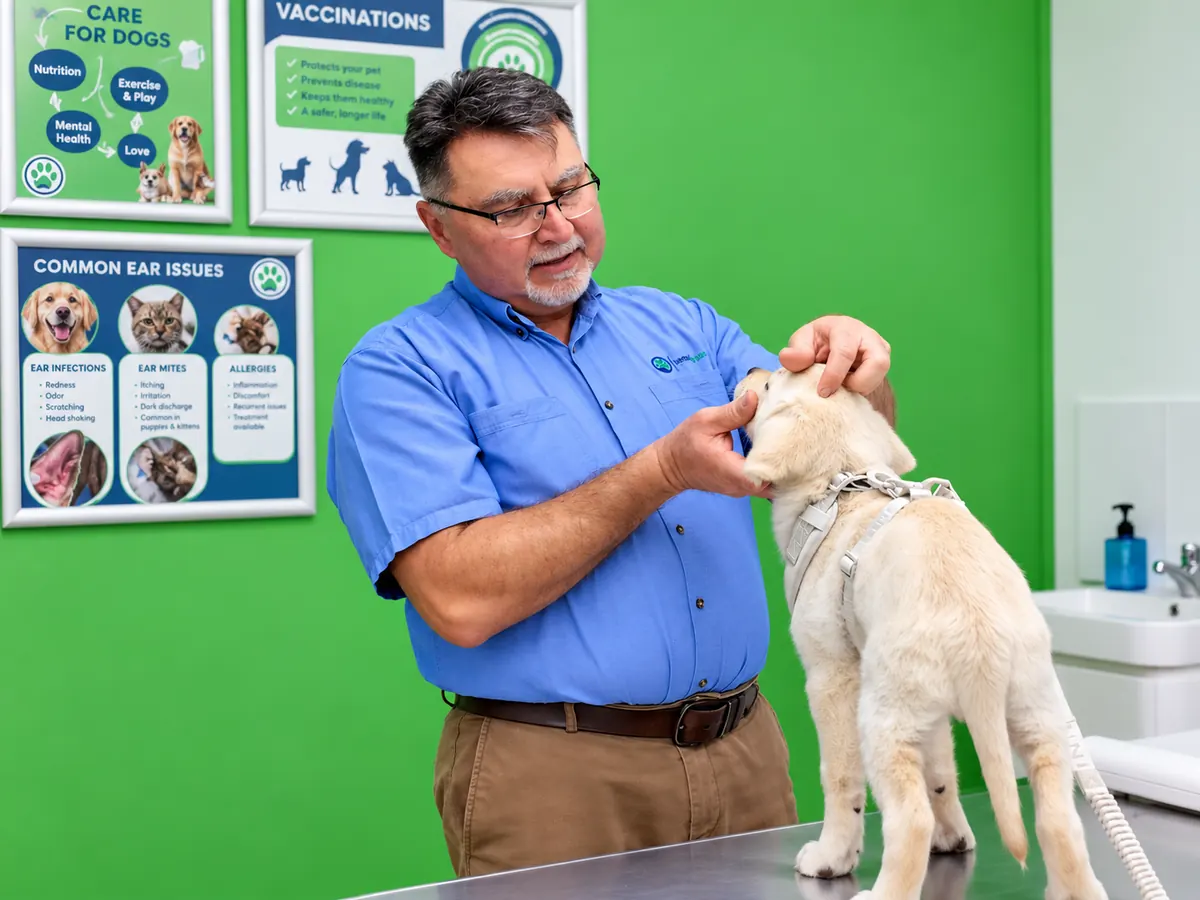
How wellness health checks may help
A wellness visit is more than a vaccination appointment. It is a chance to review your pet’s whole health, identify subtle changes and discuss practical prevention that suits your household.
Because dogs and cats often hide early disease, changes in weight, body condition, teeth, mobility, skin, thirst, appetite or behaviour can be valuable clues. Your veterinarian will prioritise findings that are relevant to your pet rather than applying the same checklist to every patient.
Nose-to-tail physical examination
Weight, nutrition, dental and mobility review
Individual vaccination and parasite advice
Regular health checks extend well beyond vaccinations
WSAVA describes regular veterinary check-ups as the core of primary care. They create a health baseline, help identify subtle change and allow prevention to be adjusted for your pet’s age, breed, lifestyle and medical risks.
Source: WSAVA Principles of Wellness (2025)When families often book this service
- A new puppy, kitten or newly adopted pet joins your family
- Your adult pet is due for a routine check-up
- Your senior pet has changes in appetite, thirst, weight, sleep or mobility
- You need advice about nutrition, behaviour, dental care or prevention
What your visit may include
- A discussion about your pet’s daily routine, diet, medications and any changes you have noticed
- A physical examination including body condition, mouth, skin, heart, lungs, abdomen, joints and other areas as relevant
- Recommendations tailored to your pet. Tests are suggested when they are likely to add useful information, rather than automatically for every patient
Possible tests, treatment and next steps
- If the examination is normal, you will receive a personalised plan for vaccination, parasite control, nutrition, dental care, exercise and the timing of the next review.
- If something has changed, your veterinarian may suggest targeted blood or urine tests, blood pressure measurement, imaging, a dental assessment or a shorter recheck interval.
- For senior pets or pets with chronic disease, monitoring is adjusted to the condition, medications, quality of life and how quickly changes are occurring.
Helpful things to bring or note
- Bring a list or photo of current medications and preventatives
- Bring vaccination records if your pet is new to the clinic
- Write down any subtle changes or questions so they are not forgotten
Going home and follow-up
- Follow the written prevention and monitoring plan, including product dates and recheck reminders.
- Track changes at home—such as water intake, appetite, weight, mobility, coughing, toileting or sleep—and contact the clinic earlier if they worsen.
- Bring up cost or medication difficulties early so the team can discuss realistic options.
Our general-practice team can provide routine health checks, preventative plans, early disease investigation and ongoing monitoring. Complex or unusual findings may be discussed with or referred to a specialist.
Routine checks are not a substitute for urgent care. Seek prompt veterinary attention for breathing difficulty, collapse, repeated vomiting, inability to urinate, severe pain, seizures, major trauma or suspected poisoning.
Questions owners often ask
How often should my pet have a check-up?
There is no single schedule for every pet. Many healthy adults are reviewed at least yearly, while puppies, kittens, senior pets and animals with ongoing conditions may need more frequent visits.
Will my pet need blood tests?
Not always. Testing may be recommended based on age, symptoms, examination findings, medications or an upcoming anaesthetic.
Can I discuss several concerns at once?
Yes. Tell the team when booking so enough time can be allowed for a longer consultation if needed.
References
This information is general in nature. Your veterinarian will tailor recommendations to your pet after an examination.