
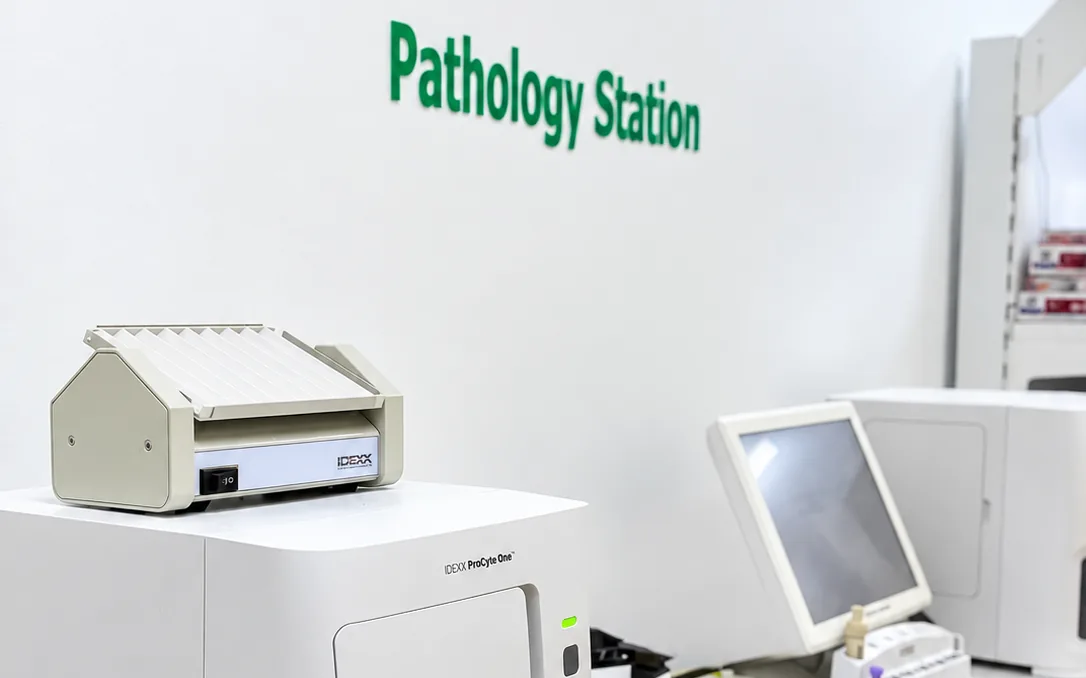
How clinical pathology may help
Clinical pathology includes examination of blood, urine, faeces, skin, ear material, cells and other samples. Choosing the right sample and collection method is important because contamination, storage and timing can change the result.
Some tests provide an answer immediately, while others identify patterns that need culture, histopathology, repeat sampling or imaging to reach a diagnosis.
Urine and faecal testing
Microscopy and cytology
In-clinic and external laboratory testing
A laboratory result is one piece of the clinical puzzle
Blood, urine, faecal, skin and cytology samples answer different questions. Results are most useful when the veterinarian selects the right sample and interprets it with the examination, history, imaging and response to treatment.
Source: AAHA Senior Care Guidelines for Dogs and Cats (2023)When families often book this service
- Your pet has urinary, gastrointestinal, skin or systemic signs
- A lump, ear discharge or skin lesion needs sampling
- Treatment response needs monitoring
- A veterinarian recommends screening before surgery or medication
What your visit may include
- The test selected will depend on the clinical question
- Samples may be examined in-clinic or sent to a specialist laboratory
- Some results are rapid; cultures, histopathology and specialised tests take longer
- Your veterinarian may recommend follow-up or additional testing
Possible tests, treatment and next steps
- The team will explain why a sample is being collected, how it will be obtained and whether sedation or local anaesthetic may help.
- Results may guide medication selection, show whether inflammation or infection is present, or help decide whether a lump should be monitored, sampled again or removed.
- When antimicrobial treatment is considered, culture and susceptibility testing may be recommended where it is likely to change management.
Helpful things to bring or note
- Ask whether you need to collect urine or faeces at home
- Use a clean container and follow the clinic’s storage instructions
- It is helpful to leave creams and ear cleaning until after sampling unless the clinic advises otherwise
Going home and follow-up
- Monitor the sampling site for swelling, persistent bleeding or discomfort.
- Follow any hygiene or medication instructions while results are pending.
- Attend the recommended recheck even if the surface signs improve, particularly for recurring ear, skin or urinary problems.
Common microscopy and sample collection are available in general practice. Specialist pathology interpretation, advanced cultures or complex biopsies may be sent to external laboratories.
Severe bleeding, collapse, inability to urinate, repeated seizures or rapid deterioration should be treated as an emergency rather than waiting for routine testing.
Questions owners often ask
Why send samples to an external laboratory?
Specialist laboratories can perform tests or provide interpretation that is not available in every general practice.
What is cytology?
Cytology is the microscopic examination of cells collected from a lump, skin lesion, ear or other site.
Can a normal result rule out disease?
Not always. Results must be interpreted with the examination and may need to be repeated or combined with other tests.
References
This information is general in nature. Your veterinarian will tailor recommendations to your pet after an examination.