
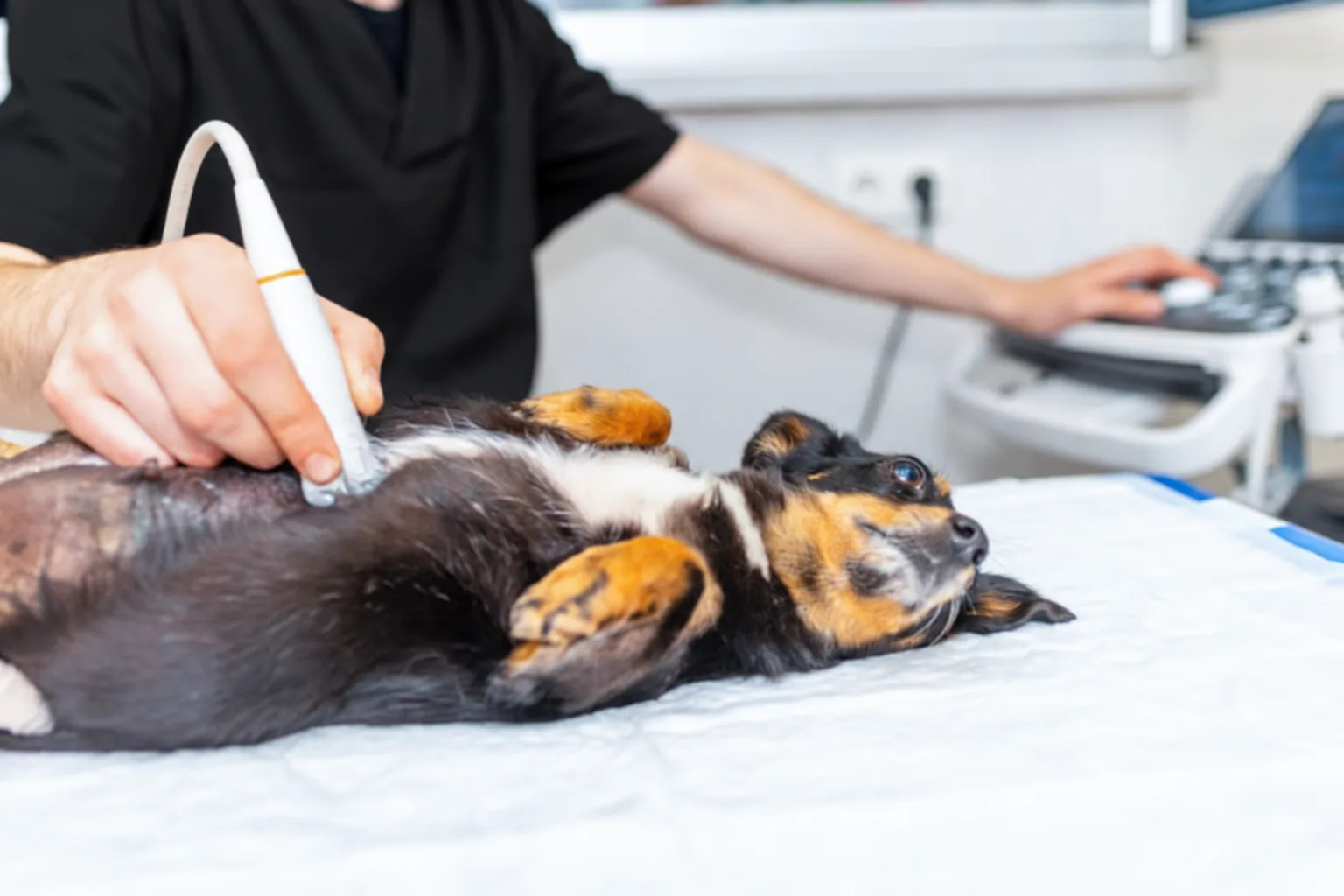
How ultrasound may help
Ultrasound uses sound waves to create real-time images of soft tissues. It can help assess the liver, gallbladder, kidneys, bladder, spleen, gastrointestinal tract, reproductive organs and some masses or fluid collections.
The quality of the examination depends on the clinical question, patient cooperation, body shape, gas in the stomach or bowel and the equipment and operator. A normal ultrasound cannot exclude every disease.
Real-time soft-tissue imaging
Abdominal and selected pregnancy assessment
Referral when advanced imaging is required
Ultrasound shows soft tissues moving in real time
Ultrasound uses sound waves rather than ionising radiation. It can help assess abdominal organs, fluid, masses and selected reproductive or urinary problems, but it does not replace every other test and some abnormalities still require sampling or referral.
Source: AAHA Senior Care Guidelines — Diagnostic Approach (2023)When families often book this service
- Ongoing vomiting, diarrhoea, weight loss or abdominal pain
- Changes in liver, kidney or urinary tests
- A mass, fluid or organ enlargement is suspected
- Pregnancy or reproductive assessment is required
What your visit may include
- Hair usually needs to be clipped over the area
- Gel is applied to the skin
- Many pets tolerate the scan awake, but sedation may help if they are anxious, painful or unable to stay still
- Some findings require specialist imaging, sampling or surgery
Possible tests, treatment and next steps
- A patch of fur is usually clipped and gel is applied to the skin. Some pets need mild sedation to stay relaxed and still.
- Ultrasound may guide a urine sample, fine-needle aspirate or other procedure when appropriate and safe.
- Findings may lead to laboratory tests, follow-up imaging, surgery or referral for a specialist ultrasound or advanced imaging.
Helpful things to bring or note
- Ask whether your pet should fast or arrive with a full bladder
- Bring previous imaging and laboratory results
- Give medications unless the clinic advises otherwise
Going home and follow-up
- If sedation was used, supervise your pet and follow feeding instructions.
- Monitor any sampling site for discomfort or bleeding.
- Contact the clinic if your pet’s abdominal pain, vomiting, urination or general condition worsens.
General abdominal ultrasound can answer many common questions in primary care. Echocardiography, complex ultrasound-guided procedures or difficult cases may be referred to an imaging or internal-medicine specialist.
A distended painful abdomen, collapse, pale gums, inability to urinate or repeated unproductive retching requires emergency assessment.
Questions owners often ask
Does ultrasound show bones and lungs well?
It is best for many soft tissues. Air and bone limit ultrasound, so X-rays or other imaging may be more suitable.
Will my pet need sedation?
Not always. The decision depends on comfort, stress, the body area and the detail required.
Can ultrasound diagnose every mass?
It can describe location and appearance, but a sample or surgery may be needed to determine the exact diagnosis.
References
This information is general in nature. Your veterinarian will tailor recommendations to your pet after an examination.