
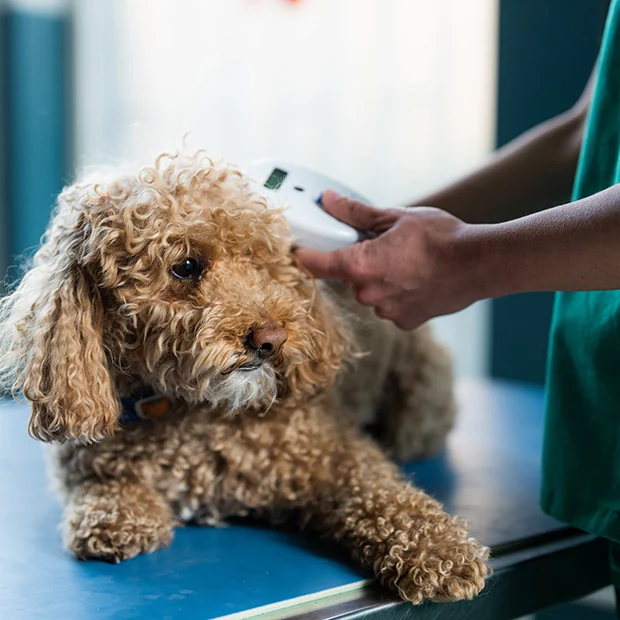
How microchipping may help
A microchip stores a unique identification number. A scanner reads that number and authorised organisations use the registry to contact the recorded owner. The chip does not contain a GPS tracker or continuously transmit your pet’s location.
Microchipping works best when the registry details are correct. Moving house, changing phone numbers or transferring ownership should prompt an update through the NSW Pet Registry or the relevant registry.
Permanent identification
Quick procedure during a consultation
NSW legal requirement for most cats and dogs
A microchip only works when the registry details are current
Microchipping provides permanent identification, but it is not a GPS tracker. In NSW, dogs and cats generally need to be microchipped before sale or transfer, or by the legally required age, and owners must keep their contact details updated.
Source: NSW Government — Microchipping cats and dogsWhen families often book this service
- Your puppy or kitten has not yet been microchipped
- You have adopted a pet and need to confirm the chip details
- Your contact details or ownership have changed
- A scanner cannot locate an expected microchip
What your visit may include
- The chip is implanted with a sterile needle, usually between the shoulder blades
- The number is scanned and recorded
- Registry details must be accurate for the chip to be useful
Possible tests, treatment and next steps
- The team scans the chip after placement and records the number in your pet’s clinical record.
- You may need to complete or confirm registration and ownership details separately; microchip implantation and council registration are related but not identical processes.
- If a previously implanted chip cannot be found, the pet may need a careful whole-body scan and the registry record should be checked before deciding whether another chip is required.
Helpful things to bring or note
- Bring any adoption, breeder or previous registry paperwork
- Have your current address, phone number and email ready
- Remember that a collar tag remains helpful even when a pet is microchipped
Booking a microchip?
To save time on the day, please download the NSW Pet Registry Permanent Identification (P1A) form and fill in your details and your pet’s details before your appointment, using black ink and block letters. Bring it with you, and our team will complete the microchip section once the chip is implanted and lodge the identification with the NSW Pet Registry.
Microchipping identifies your pet but does not register it — lifetime registration is completed separately through the NSW Pet Registry.
Changing your pet’s owner?
If you are selling, rehoming or taking ownership of a pet, please download the NSW Pet Registry Change of Owner (C3A) form and complete it before you come in. Both the former owner and the new owner need to fill in and sign the form, and bring your pet so we can scan the microchip and confirm the number matches.
The former owner is responsible for lodging the completed form with a local council within 14 days. The change can also be made online through the NSW Pet Registry.
Going home and follow-up
- Most pets need no special care beyond avoiding repeated rubbing of the implantation area that day.
- Keep a collar tag with a current phone number as an additional, immediately visible form of identification.
- Check the registry details after any change of address, contact number or ownership.
Microchip implantation and scanning are routine general-practice services. Registry disputes or legal ownership questions may need to be resolved with the registry, council or appropriate legal authority.
Microchipping is not an emergency service. If your pet is currently missing, contact local councils, shelters, nearby veterinary clinics and update the registry status promptly.
Questions owners often ask
When is microchipping required in NSW?
Cats and dogs generally must be microchipped before being sold or given away, or by 12 weeks of age.
Does a microchip track my pet?
No. A standard microchip is identification, not GPS tracking.
Do I need to update the details?
Yes. A correct phone number and address are essential when a lost pet is found.
References
This information is general in nature. Your veterinarian will tailor recommendations to your pet after an examination.